

Take Control of Your Heating
You are here: Home > Take Control of Your Heating
Heating your home and hot water accounts for on average 60% of an average households energy costs. So it is important to understand how the controls of the heating system work and to ensure that they are set correctly. Investing a little time in this will save you money for years to come.
Review the Settings on your Heating and Hot Water Controls.
Heating
Set your heating timer so that you are only using the heating when you need it and that the heating it switches off whilst you are out of the house or asleep.
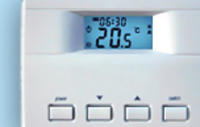 Room thermostats can help you maintain a comfortable and healthy room temperature. Make sure these are set correctly. A healthy temperature is between 18°c and 21°c so set your thermostat somewhere in this range according to your personal taste. Use a thermometer (your energy master may be able to supply a thermometer card) to keep an eye on the temperature.
If you have them use thermostatic radiator valves (TRVs) to prevent wastage of energy and money in heating little used or unused rooms. A TRV will override the temperature set by the main thermostat for your heating system.
Ensure all your radiators are working, if in doubt, bleed it out. A radiator that needs bleeding will not be as warm as other radiators. The heating system should be switched off when you bleed radiators to stop more air from entering the system. Hold a cloth underneath the radiator key and open the valve very slowly as dirty water can spray out.
Hot Water
Work out when you require hot water and set the timer. The hot water thermostat should be set at 60°C for safe operation of your domestic hot water.
Your hot water should also be set to come on only when needed. It is a myth that it’s more efficient to leave your hot water on all the time. If you switch it on just in time to heat up the water for when you need it, then it will use this amount of energy. But if you have the hot water on for any longer, you will need to keep adding energy to keep it warm.
For most households the water will be switched on once for the morning and once for the evening. If your home has low hot water demand and a well insulated cylinder, it may be sufficient to have the hot water come on once just before you wake up only. That way enough warm water will be left over to clean the dishes in the evening. Experiment to see what works best for your home.
Want to do More?
Your house will have a certain ‘warm up’ and ‘cool down’ period, depending on the age of the property and how well insulated it is. For example for a new property this time will be approx. 15 minutes. Find out yours and take this in to account when you set your programmer so you can wake up and get home to a toasty warm house, without wasting money.
In rooms you do not use very often, adjust the thermostatic radiator controls to low. It is best to have the room heated to a low temperature even if it is not in use in order to help minimize the risk of condensation.
It’s often tempting to turn your thermostat up on days when it is colder outside. However the room thermostat ensures that whenever your heating system is on, the house always heats up to the same temperature whatever the weather. It may just take a little longer to reach this temperature on colder days, so you might want to set your heating to come on earlier in the winter.
The Energy Saving Trust is the UK's leading impartial organisation helping people to save energy and reduce carbon emissions. It not only provides expert insight and knowledge about energy saving but also quality assurance for goods, services and installers. They have a wealth of useful information on their website www.energysaving trust.org.uk or call the free advice line on 0800 512 012.
| Attachment | Size |
|---|---|
| EN2 toptip 1 - UK Version.pdf | 275.29 KB |